July 2026 blog
One of the biggest challenges teachers face is balancing high-quality feedback with an ever-increasing workload. Traditional book marking has its place, but it is often time-consuming and delays feedback until long after the learning has taken place. Live marking allows us to give immediate, meaningful feedback that has a direct impact on student progress, addressing misconceptions in the moment and also keeping students accountable for the work they complete (or do not complete in some student’s cases!). It also allows all marking to be left at school. In my opinion, books should never be taken home; work is work and home is home. This allows a healthy work-life balance.
The key techniques I use to help with live marking are:
- Always having a green pen in hand
- Do now tasks
- Challenge Tasks
- Use of video in lesson
- Directing students to previous learning
- Use of sentence starters
Below I go through these techniques as to how to implement them and also some evidence showcasing them.
One of the simplest habits I have developed is ensuring that I always have a green pen in my hand whilst circulating the classroom. This was a habit that I thought was the norm in teaching, but after having conversations with some staff members who did not, it led to me wanting to write this blog. As students work independently, I move continuously around the room, checking understanding and identifying misconceptions. This allows me to recognise excellent work, address common errors and support students before misconceptions become embedded. Students receive instant guidance and can act upon it immediately, making the feedback far more impactful.
A successful live marking routine begins at the very start of the lesson. Having a consistent “Do Now” task provides valuable opportunities to begin marking books whilst students complete it. The key is choosing a starter that can be checked rapidly, such as retrieval questions or short recall activities. In science, we have our blast from the past, 4 boxes that are quick to mark. Before the lesson, I already knew the likely support prompts or extension questions that I will use depending on how students perform. Students who require support receive scaffolding, whilst those who demonstrate secure understanding can be challenged further.
Challenge tasks are another effective way of combining feedback with student progression. We all teach those students who just like to complete the bare minimum. They are capable but don’t want to stretch themselves. I have it all the time, for example, 3 questions on the board and challenge, they have completed Q1-3 but are now sitting there doing nothing instead of challenge. This is where live marking is perfect, I mark Q1-3 and if feedback is needed it is given. If all 3 are correct, then I direct them to the challenge, writing “challenge” in red pen. They will say “I dunno sir” or “I don’t get it” to which I will give them some verbal feedback. They will then complete the challenge in red pen as this verbal feedback has helped them complete it. This ticks all boxes as it gets marking in book, student makes progress, student gains confidence for doing challenge and thus hopefully raises aspiration for next time when they will start to complete challenges independently instead of doing bare minimum.
Sometimes in lesson, we will all use videos from YouTube to reinforce learning and to give the students a rest from our voice. Before the video, students will know ‘what is the point of the video’ and what information they are trying to attain from it. While they watch, I use these couple of minutes to target a specific table of students, live marking their previous work or just checking for literacy. I have then ticked off a table of books.
Another strategy that has proved highly effective is using my green pen to direct students back to previous learning. We all have those students who despite doing the work literally yesterday, they will say “I dunno” or “I’ve never learnt that before” instead of using previous notes to answer the question. This is where in green pen I will write “Use work from 3rd June”. This not only encourages students to use their books as a valuable learning resource but it also means I have put green pen down to which they have used this to find information in their book. I’ll then confirm verbally with them what they find and they will finish their answer in red pen.
Finally, I frequently use sentence starters in my PowerPoints to support students during extended writing tasks. For some students, they need a prompt to actually start the work so writing “use sentence starter” with some verbal input provides enough scaffolding to help them begin independently. In other situations, after providing verbal feedback, I may write the opening of a sentence in green pen. Students then complete the response themselves in red pen. This makes the feedback visible whilst ensuring that the thinking and learning remain the responsibility of the student.
Across all of these strategies, the common theme is that feedback becomes an active part of the lesson rather than a task completed afterwards. Students receive immediate guidance, act on feedback whilst the learning is still fresh and clearly demonstrate their improvements through the use of red pen. At the same time, we as teachers reduce the need for extensive marking outside of lesson time because much of the feedback has already been delivered when it has the greatest impact.
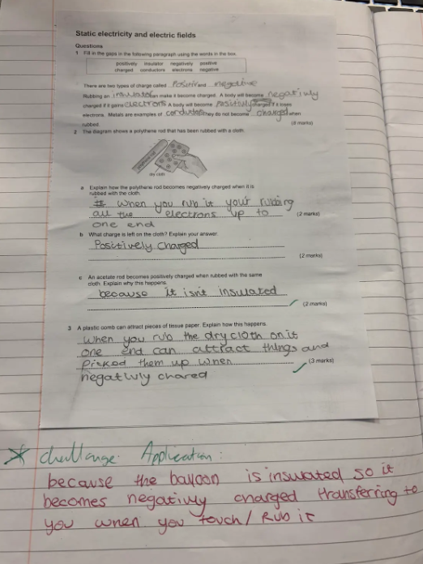
Mr Bailey using challenge task technique to help with live marking. His verbal input has helped the student answer the challenge, which is completed in red pen.
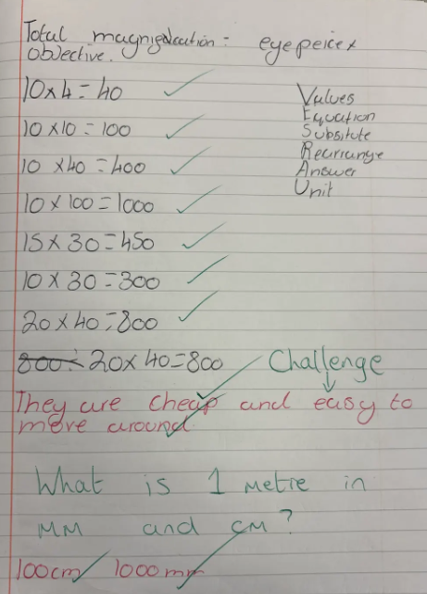
Use of challenge task with verbal feedback for live marking.
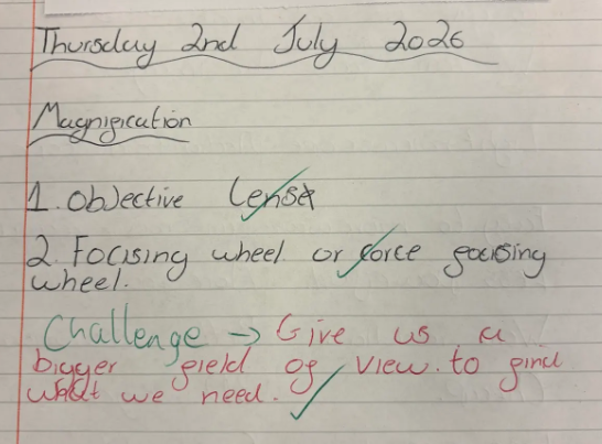
Student completed starter but prompted to challenge with live marking.
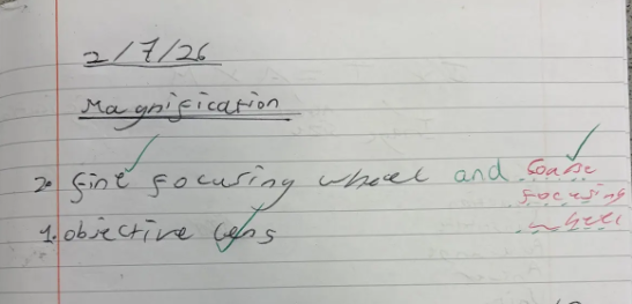
Use of Do Now task and live marking to support student.
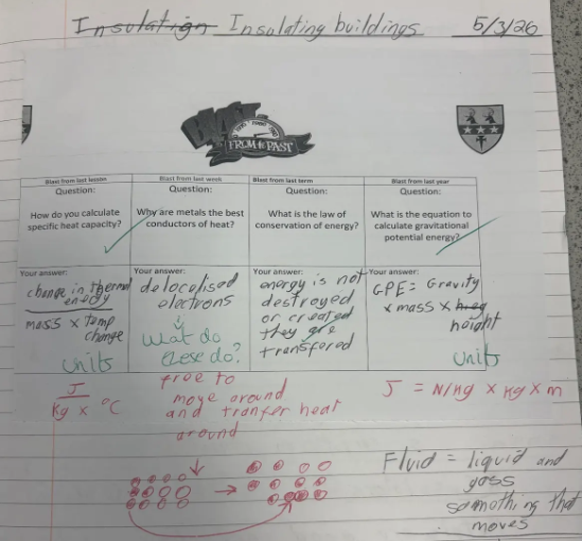
Use of easy to mark Do Now task for live marking.
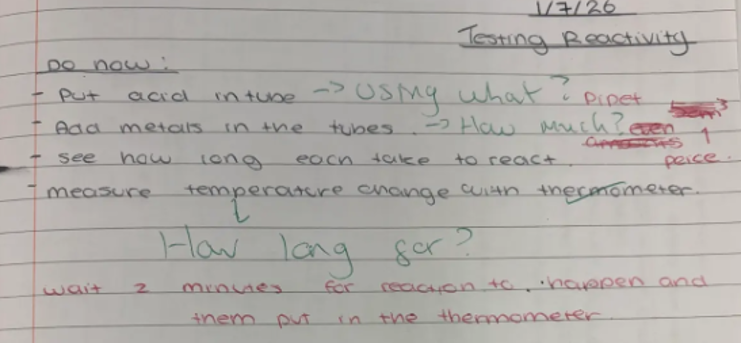
Use of Do Now routine, students quiet completing starter. Perfect time for live marking.
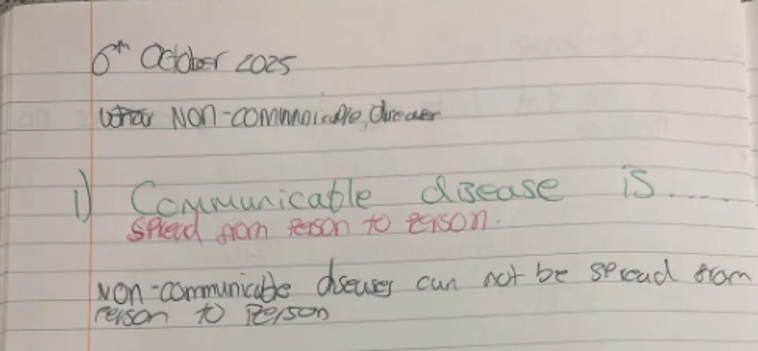
Use of sentence starter with verbal feedback to help student response.
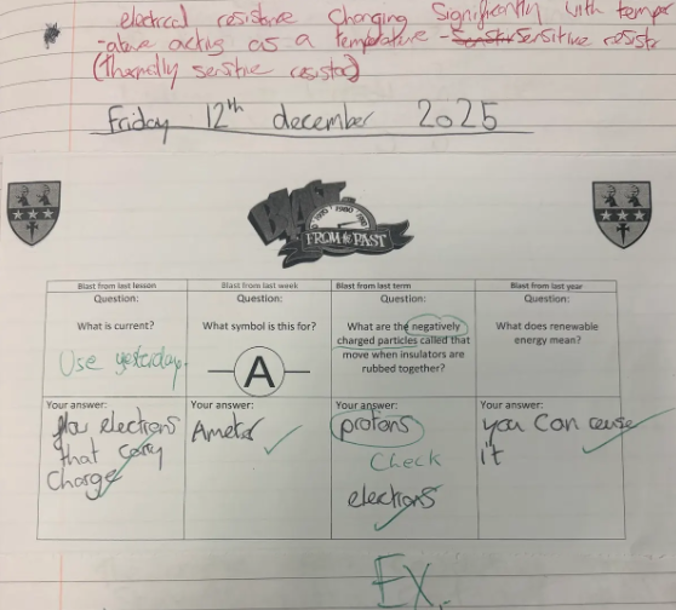
Use of previous lesson to direct the student to make progress (although this student hasn’t used a red pen eurghhh!)
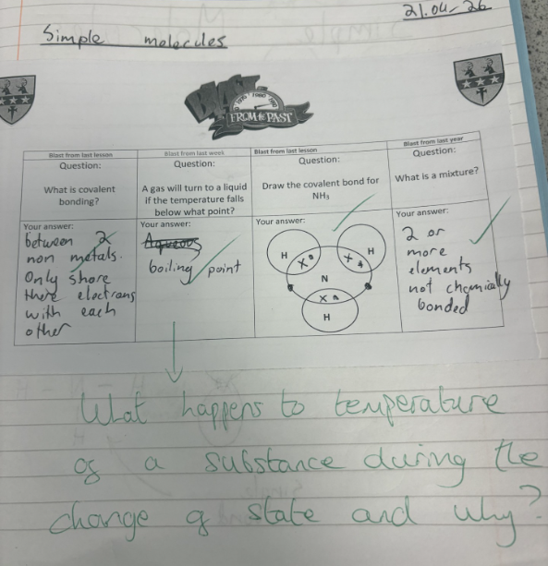
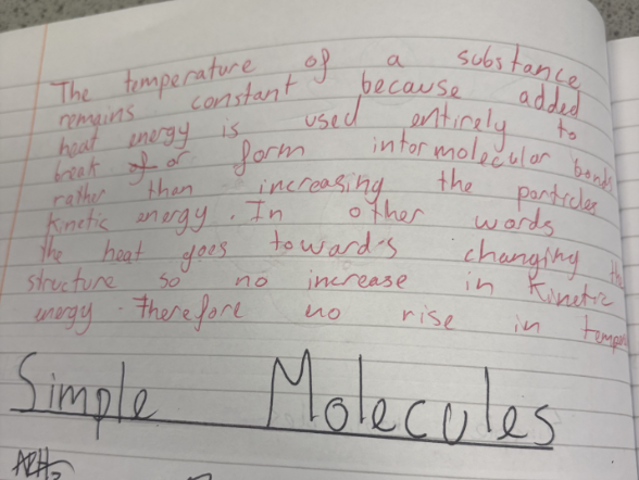
Use of live marking to stretch and challenge student.